 ChatGPT
 GeminiChatGPTGemini
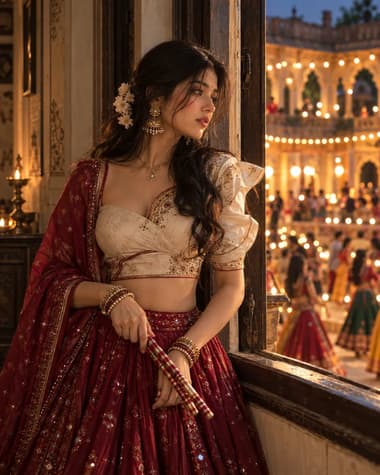
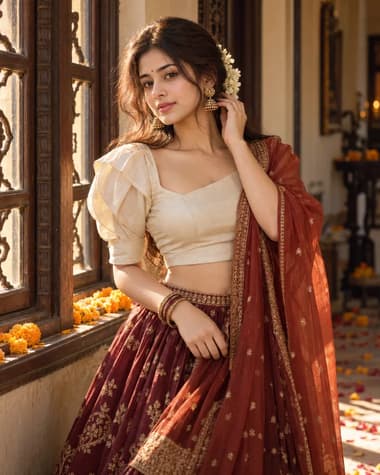
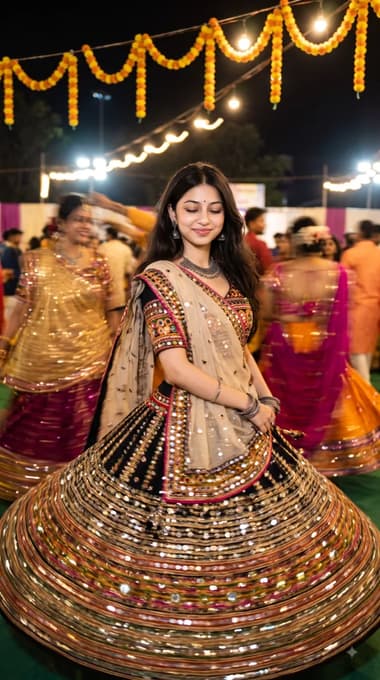
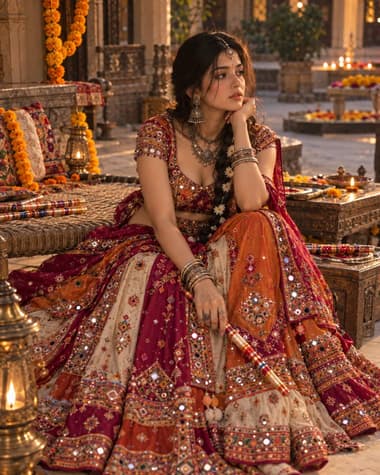
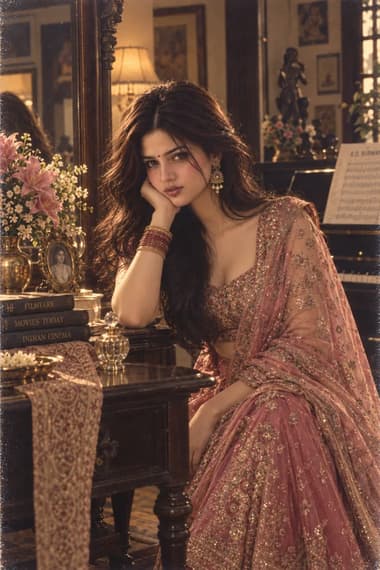
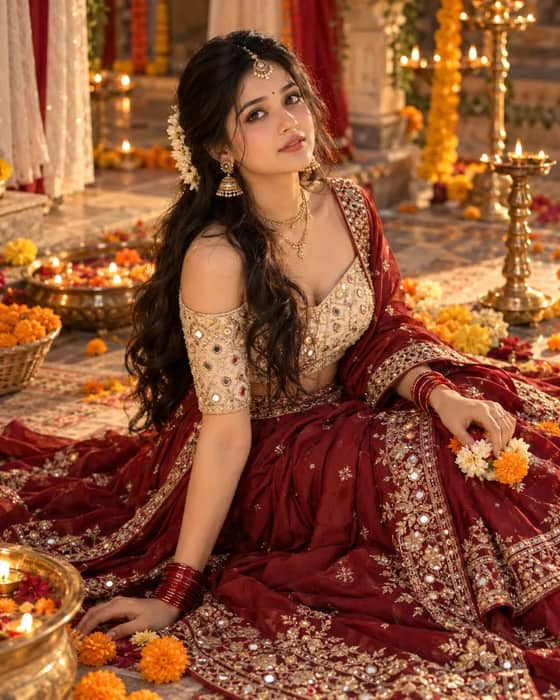
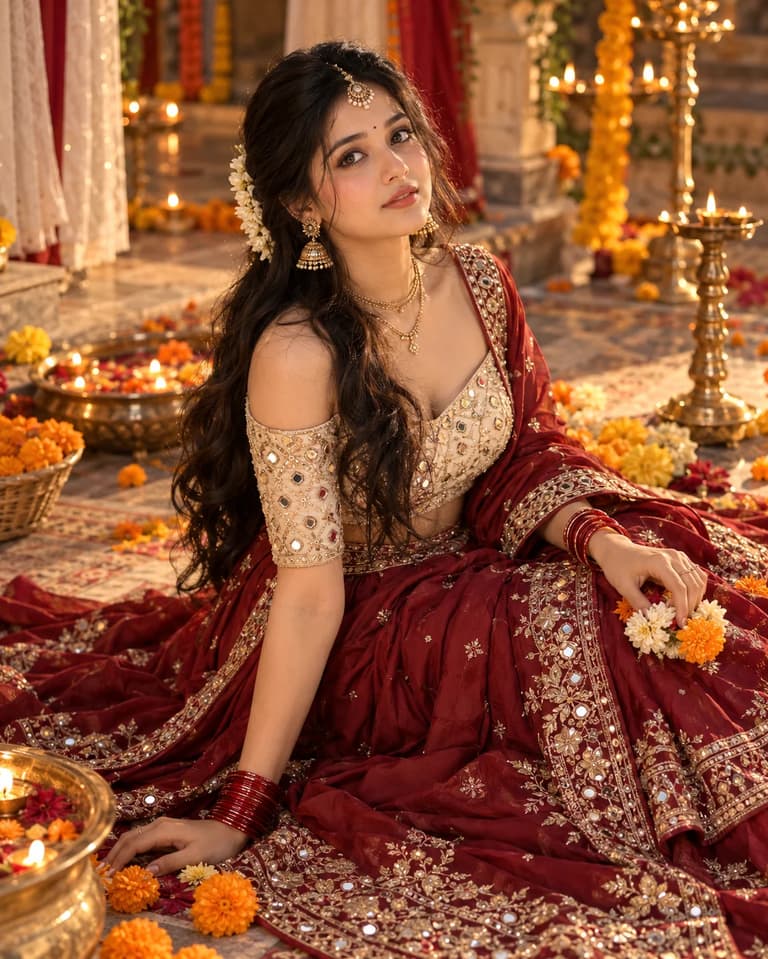
A graceful Navratri portrait in a rich maroon lehenga with an ivory mirror-work blouse, jasmine flowers, diyas and a softly decorated courtyard.

Quick workflow
Copy the prompt, customize any details, and generate in ChatGPT or Gemini.
Open ChatGPT or Gemini in your browser or app.
Upload your selfie to use your own face (or skip to make a new character).
Copy the prompt card above and paste it into the chat.
Press send to generate. Adjust any details you want.
Browse our curated library of tested AI image prompts or filter by your favorite tool.
Guide
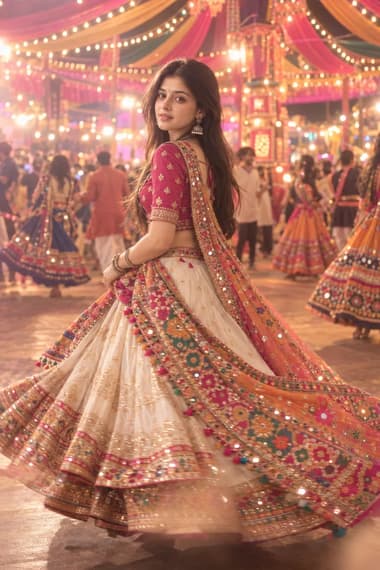
A maroon mirror-work lehenga portrait for Navratri gives you a close-framed shot of a woman in traditional festive dress, the deep red fabric catching light off tiny glass mirrors. The prompt blends a specific colour, a textile craft, and a festival context into one image that looks like it belongs in a Navratri campaign shoot.
The core prompt
A portrait of a young Indian woman wearing a maroon mirror-work lehenga, Navratri festival, gold jewellery, bindi, soft diya-lit evening atmosphere, warm skin tones, shallow depth of field, 4k, photorealistic.
Leave out the mirror-work phrase and the model will often deliver a plain maroon lehenga with gold or thread embroidery instead. That’s a different look. The specific term “mirror-work” triggers small reflective discs across the fabric—what you’d see in a real shisha-embroidered chaniya choli. If the model keeps giving you flat decoration that looks like printed foil, the fix is simple.
Use the traditional name
When “mirror-work” reads as metallic paint rather than actual embedded glass, swap it for “shisha embroidery with individual round mirrors.” That phrasing pushes the model to render separate mirror elements, which catch the light and create the glint you want in a festive portrait.
Dark red clothing easily soaks up exposure, and models sometimes compensate by darkening the entire scene—including the subject’s face. You get a muddy portrait. The prompt above already includes “warm skin tones” and “soft diya-lit evening atmosphere,” but you can go further. Adding “soft fill light on the face” and “rim light catching the mirror-work” separates the subject from the background and puts the sparkle exactly where it belongs. A shallow depth of field helps too: it keeps the lehenga detail sharp at the focal plane while fading out distracting background elements.
GPT IMAGE 2.5 vs Nano Banana Pro — what differs
Both tools handle this prompt. GPT IMAGE 2.5 tends to give crisper mirror reflections and fabric folds. Nano Banana Pro leans toward warmer, softer skin rendering out of the box. If you’re on Nano Banana Pro and the image comes out slightly cool for a diya-lit scene, just add “warm golden light from oil lamps” to the prompt. The adjustment pulls the colour temperature back toward festival warmth without messing with the maroon.
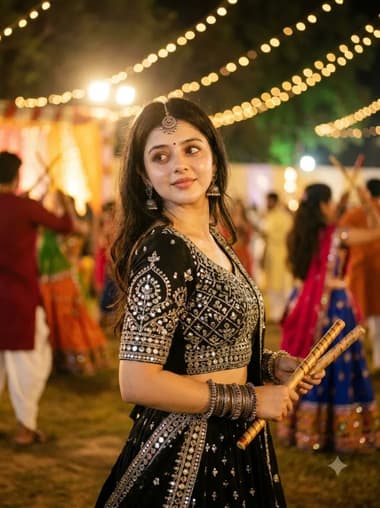
A common mistake is requesting a complex hand gesture—like holding a dandiya stick or performing a mudra—in a portrait crop. AI models still struggle with precise finger placement, and you’ll often get twisted digits or extra joints. For a clean portrait that still feels festive, describe a relaxed pose with implied movement. Something like “hands resting gently near the waist, gold bangles visible” works reliably. The focus stays on the mirror-work, the jewellery, and the face, which is what most people want from this kind of image.
If you need a dandiya prop, switch to a wider three-quarter body shot and lower the hands to waist level. That gives the model more room to render the sticks without cramping the fingers into the frame. The fabric and mirror-work still carry the Navratri identity, even without a dance freeze-frame.
FAQ
Skip vague words like 'embroidered lehenga' and name the embroidery style directly. Write something like 'maroon silk lehenga with tiny circular shisha mirrors hand-stitched in floral borders, silver thread outlining each mirror.' Mention how light hits them — 'soft side light making the mirrors catch a warm sparkle.' GPT IMAGE 2.5 and Nano Banana Pro both get much closer to real shisha work when you describe the material (glass mirrors, silver patti) and the pattern placement. Adding 'close-up portrait' helps keep the detail from getting lost.
The AI needs the exact clothing parts spelled out. Use 'lehenga choli' and mention a 'sheer dupatta draped across the chest and falling over one shoulder.' Say 'garba-ready Gujarati style' or 'festive Navratri look' to anchor the cultural context. If you want a bare midriff, explicitly add 'backless choli and high-waisted ghagra.' When I test this in GPT IMAGE 2.5 and Nano Banana Pro, listing the components — ghagra, choli, dupatta — stops the model from defaulting to a prom dress or plain anarkali.
Add a short lighting phrase right after you describe the subject. 'Soft natural window light, creamy beige background, shallow depth of field' pushes the image toward a warm fashion-portrait feel. For the golden Navratri glow, try 'golden hour sunlight grazing the face, rim light on the dupatta.' I've found mentioning '85mm lens, f/1.4' gives the background that smooth bokeh blur without making the prompt too long. Both GPT IMAGE 2.5 and Nano Banana Pro understand these cues, so you don't need a big complicated lighting setup — just a few specific words.
Next ideas
 ChatGPTModel:GPT IMAGE 2.5