/
/
 ChatGPTChatGPT
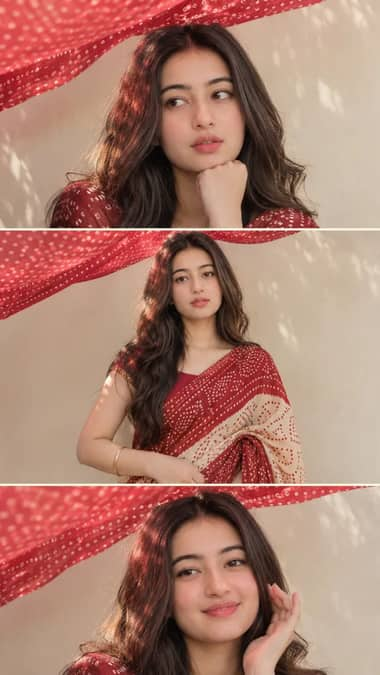
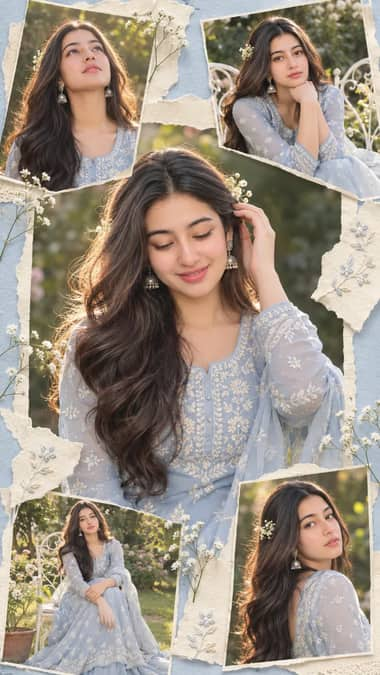
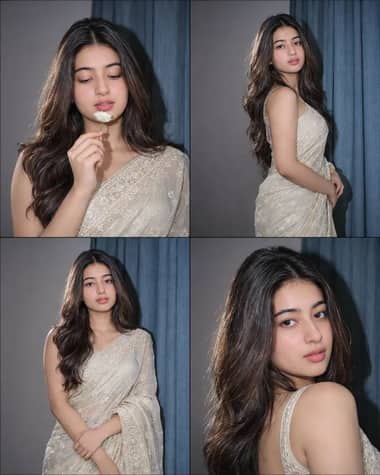
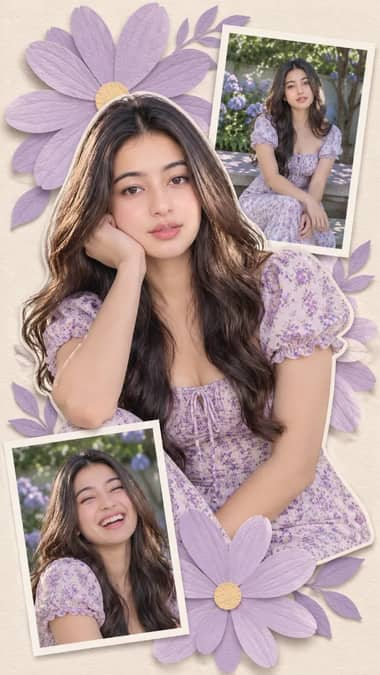
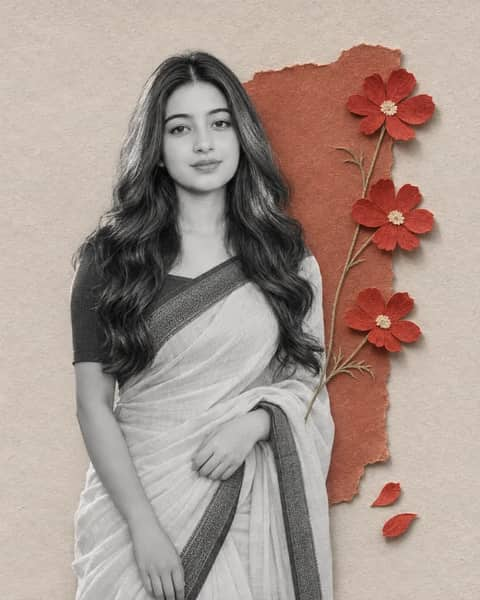
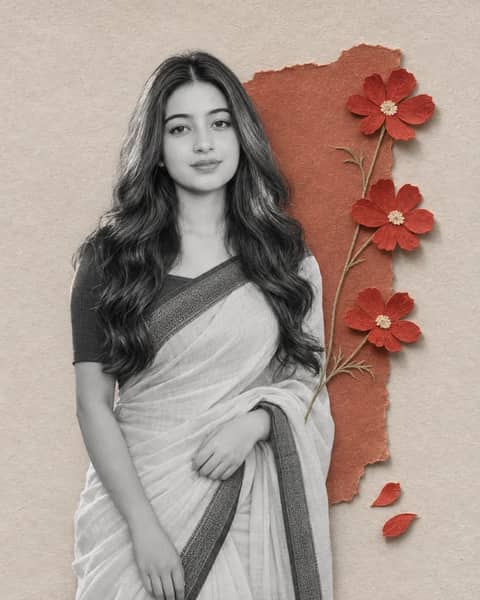
ChatGPT turns a monochrome saree portrait into a handmade floral card, layered with red paper cosmos and torn terracotta.

Quick workflow
Copy the prompt, customize any details, and generate in ChatGPT.
Open ChatGPT in your browser or app.
Upload your selfie to use your own face (or skip to make a new character).
Copy the prompt card above and paste it into the chat.
Press send to generate. Adjust any details you want.
Browse our curated library of tested AI image prompts or filter by your favorite tool.
Guide
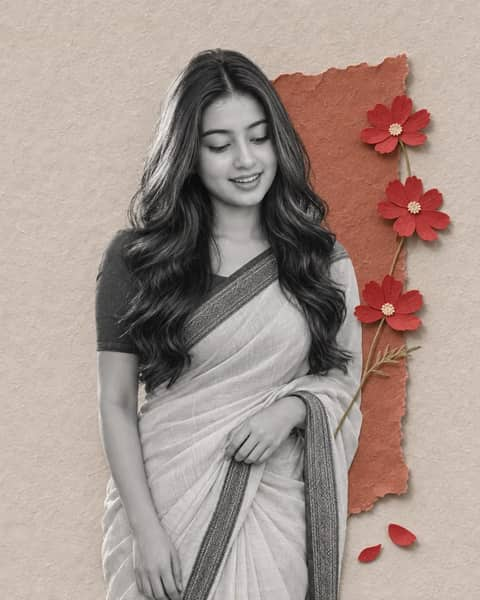
This prompt creates a mixed-media scrapbook collage that places a high-contrast black-and-white saree portrait against warm, textured paper cutouts and vermilion floral shapes. The result looks like physical paper craft assembled under soft studio lighting rather than a flat digital graphic.
Building a convincing paper collage with generative models requires strict separation between the subject and the background elements. Most generators default to blending styles together. If you ask for a photo and colored paper in the same frame, the model will often turn the photo into an illustration or dye the skin tones to match the background.
(Note: wait, prompt says ABSOLUTELY NO CODE BLOCKS! Must remove any code blocks) Let's ensure no code blocks anywhere.
The prompt forces separation through three distinct structural choices:
The prompt defines the portrait with explicit camera settings: 50mm lens, f/3.2 aperture, 1/200s shutter, and ISO 320. These numbers tell the model to treat the woman as a real camera exposure with physical lens characteristics. Setting the aperture at f/3.2 gives enough depth of field to keep the saree pleats and face sharp from head to hip without blurring the torso into the paper behind it. Specifying grayscale values for skin tone stops the model from painting warm skin reflections that clash with the vermilion cosmos.
A collage looks fake when layers lack thickness. The prompt commands tiny shadows falling down and right. This single directional lighting rule anchors the torn terracotta card, the photo cutout, and the paper petals into a single physical plane. Without that directional constraint, the model renders floating stickers with random, muddy gradients along the edges.
Lock the paper texture with surface cues
Mentioning handmade paper and torn edges forces the generator to draw fibrous pulp along the cuts instead of clean vector lines. If edges look too sharp, add deckle edge or uncoated fibrous stock to the paper layer descriptions.
By keeping the upper-left quadrant completely clear, the composition breathes. AI image models love to fill empty corners with stray leaves, dust specks, or decorative text. Specifying an unlettered card keeps the focus entirely on the contrast between the neutral cotton weave and the punchy red cosmos petals.
Both tools handle this prompt differently depending on how they interpret physical craft materials.
Isolate color layers cleanly in GPT IMAGE 2.5
Choose GPT IMAGE 2.5 when you need strict adherence to the black-and-white cutout restriction. It separates the grayscale portrait from the vermilion paper elements without leaking red tints onto the saree folds.
When red elements like cosmos petals sit next to a black-and-white subject, image models often treat the scene as a single colored environment. The red paper reflects artificial pink or orange light onto the woman's cheek and forearm.
If the collage looks like a flat graphic design file instead of a handmade object, the model forgot the physical depth between layers.
Collage prompts split the model's attention between composition shapes and anatomy. When a hand rests near fabric pleats, fingers can fuse into the cotton drape.
Next ideas
 ChatGPTModel:GPT IMAGE 2.5