/
/
 ChatGPT
 GeminiChatGPTGemini
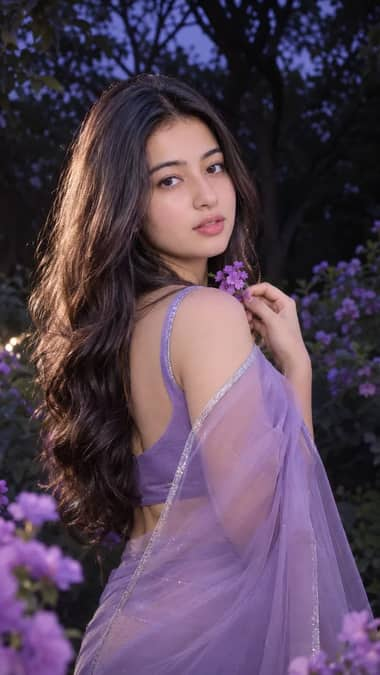
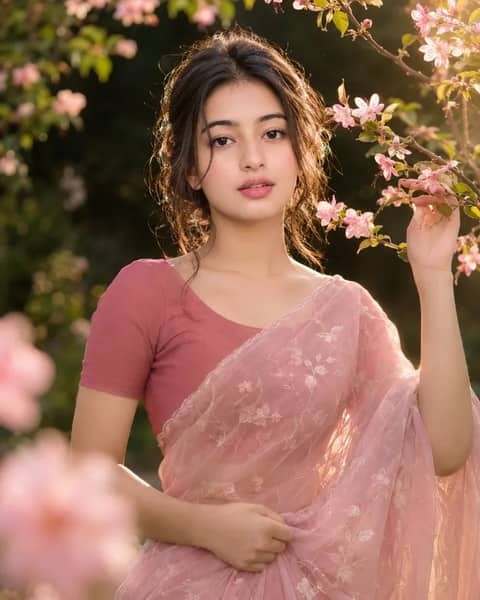
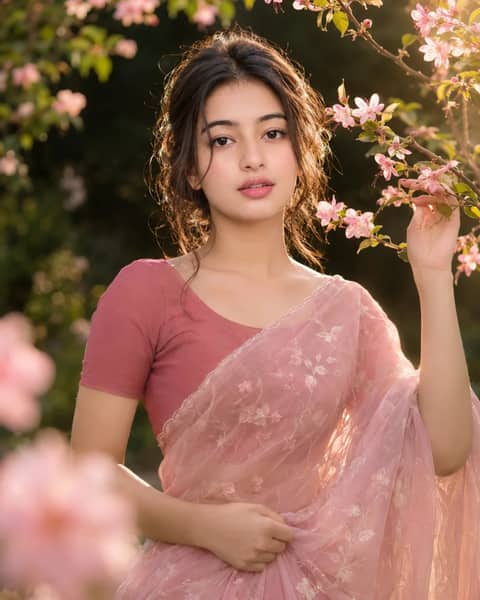
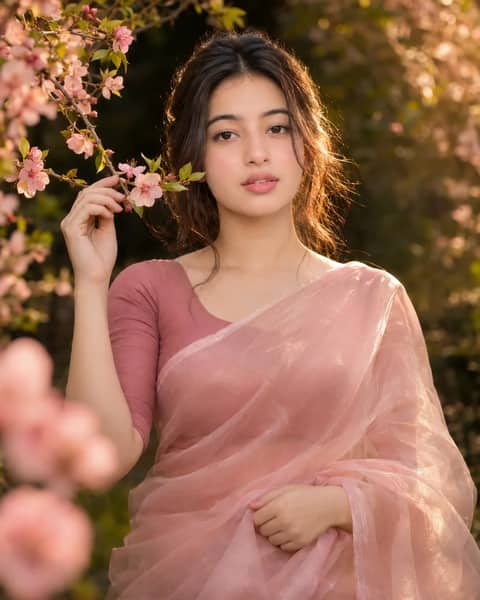
Softly blurred peach blossoms frame a powder-pink saree in this romantic garden photo. Recreate the backlit look with ChatGPT or Gemini.

Quick workflow
Copy the prompt, customize any details, and generate in ChatGPT or Gemini.
Open ChatGPT or Gemini in your browser or app.
Upload your selfie to use your own face (or skip to make a new character).
Copy the prompt card above and paste it into the chat.
Press send to generate. Adjust any details you want.
Browse our curated library of tested AI image prompts or filter by your favorite tool.
Guide
This prompt generates a soft-focus portrait of a woman in a powder-pink organza saree, framed through blooming peach blossoms with late afternoon backlight. It is built specifically for natural portrait framing where foreground elements add depth without swallowing the subject.
Many portrait prompts default to an extreme f/1.4 aperture. While that gives heavy background blur, it often turns foreground flowers into muddy, distracting blobs of pink soup. This prompt specifies a full-frame 50mm setup at f/2.8.
At f/2.8, the camera retains enough structure in the foreground petals at lower left to keep them recognizable as peach blossoms. The subject's face, pinned hair, and the crisp border of the organza saree stay sharp. A 50mm field of view also prevents the wide-angle facial distortion that ruins close-up Indian ethnic portraits, keeping nose and jaw proportions realistic without flattening the scene like an extreme 135mm telephoto lens would.
The shutter speed setting (1/250s) and ISO 400 guide the model toward outdoor daylight behavior rather than noisy studio lighting. AI image generators treat exposure parameters as style anchors. When you tell the engine to shoot at 1/250s, it cuts down on motion blur artifacts along the loose hair tendrils and the fingers holding the tree branch.
Keep the aperture at f/2.8 for layered foregrounds
If you drop the aperture to f/1.2 or f/1.4, image generators tend to smear the foreground petals directly across the model's cheek. Sticking to f/2.8 creates clean separation between the blurred branch in the foreground and the subject's face.
Backlighting often breaks AI skin tones. When a strong light source sits behind the subject, generators frequently turn the face into a muddy silhouette or blow out the edges of the cheekbones with harsh white halos.
This prompt counters that by pairing two distinct light directions:
Specifying "powder-pink organza" matters here. If you just write "pink saree", the model usually generates heavy shiny silk or flat polyester. Organza has a stiff, sheer quality that traps light differently. The prompt pairs this with a "plain rose blouse" to avoid overwhelming the frame with competing embroideries.
Both supported engines produce distinct results with this prompt structure.
GPT IMAGE 2.5 handles fine fabric folds with better physical weight
If your priority is the drape of the saree and the exact separation of the organza pallu from the background garden, GPT IMAGE 2.5 delivers cleaner textile physics.
GPT IMAGE 2.5 excels at facial identity preservation when you upload a reference photo. It follows the negative space request—keeping the dark gap in the garden foliage behind her head—which makes the subject pop forward naturally. Its handling of the hand lifting the branch is usually anatomically sound on the first generation.
Nano Banana Pro leans harder into painterly softness. It produces richer peach and cream tones in the foliage, making the garden look lusher. However, it can sometimes over-soften the organza texture into plain chiffon. If you run this prompt in Nano Banana Pro, add the phrase "crisp sheer organza weave" to prevent the drape from losing its structural edges.
Organza and peach blossoms create an environment saturated with magenta and warm reds. The engine often splashes pink tones across the model's teeth, forehead, and the whites of her eyes.
AI struggles whenever hands touch organic shapes like twigs or flower stems. The fingers often morph into bark or sprout extra knuckles.
Backlight can burn out fine hair strands, turning them into solid white patches.
Next ideas
 ChatGPTModel:GPT IMAGE 2.5