/
/
 ChatGPT
 GeminiChatGPTGemini
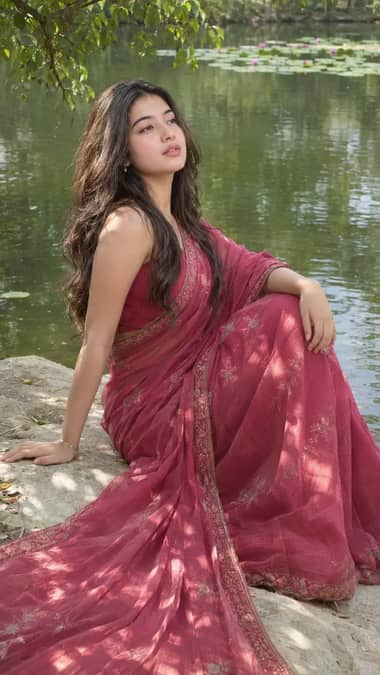
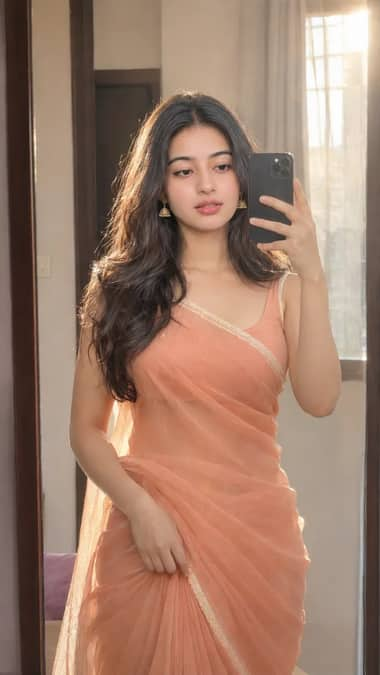
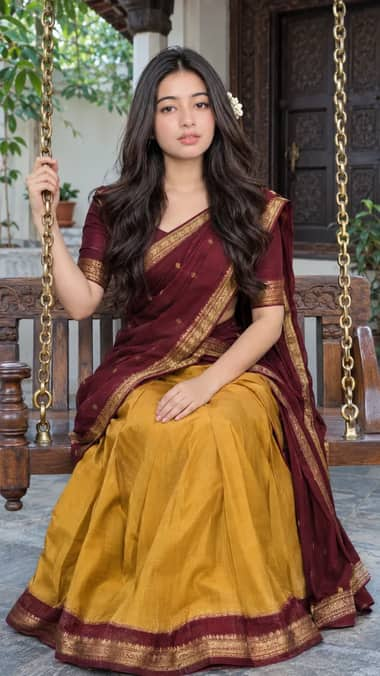
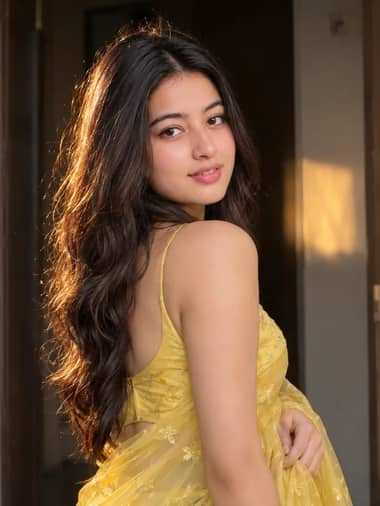
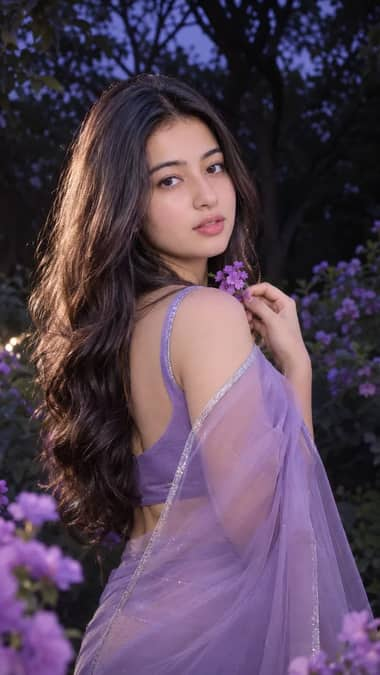
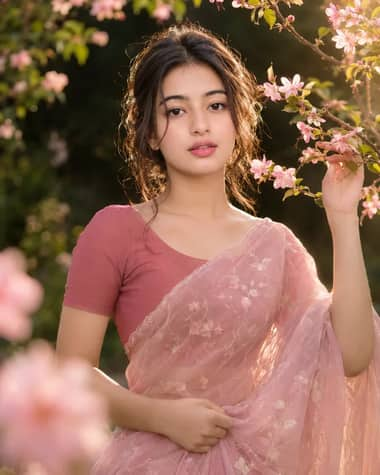
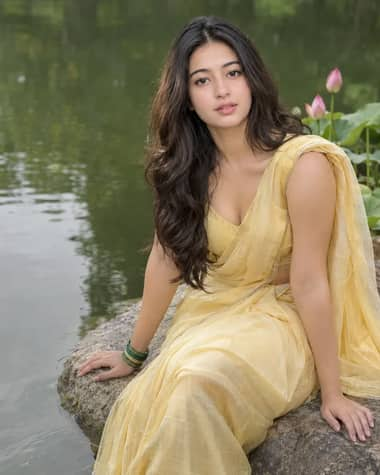
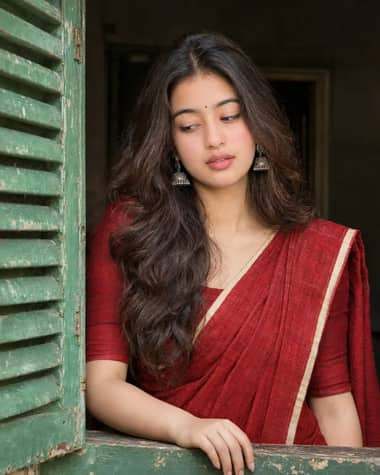
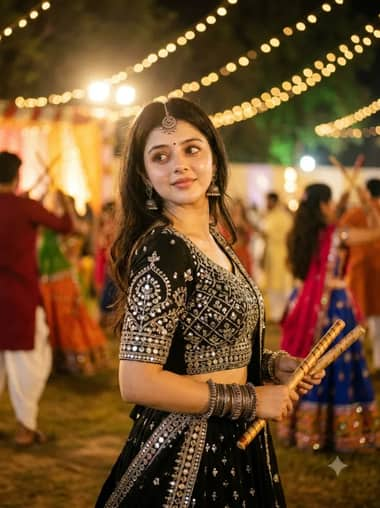
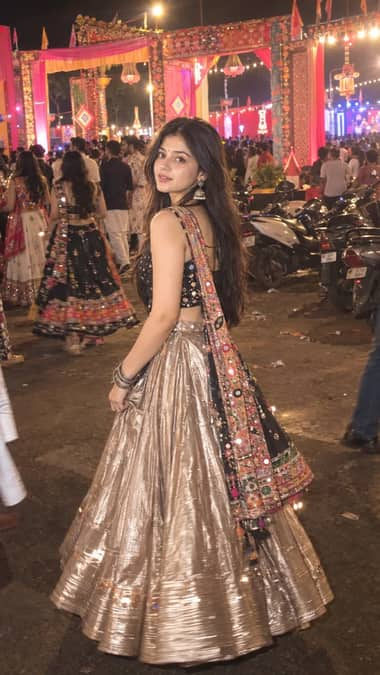
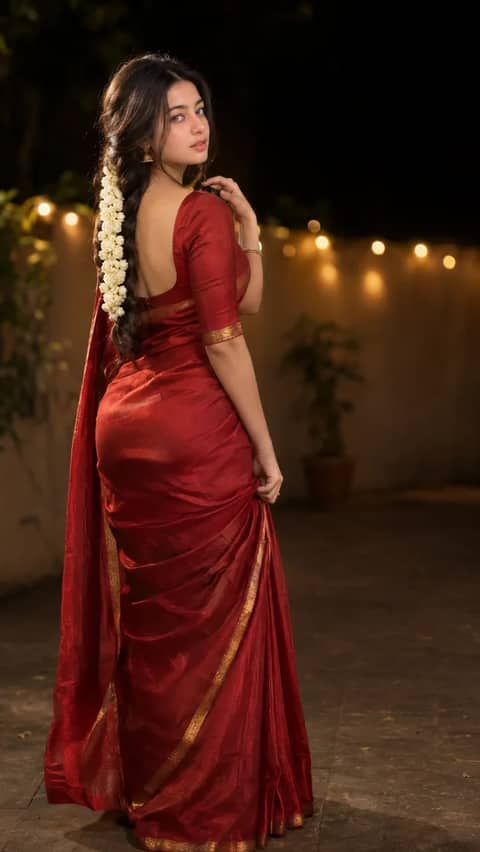
Golden courtyard lights catch a jasmine-adorned braid against crimson silk. Try this graceful traditional look in ChatGPT or Gemini.

Quick workflow
Copy the prompt, customize any details, and generate in ChatGPT or Gemini.
Open ChatGPT or Gemini in your browser or app.
Upload your selfie to use your own face (or skip to make a new character).
Copy the prompt card above and paste it into the chat.
Press send to generate. Adjust any details you want.
Browse our curated library of tested AI image prompts or filter by your favorite tool.
Guide
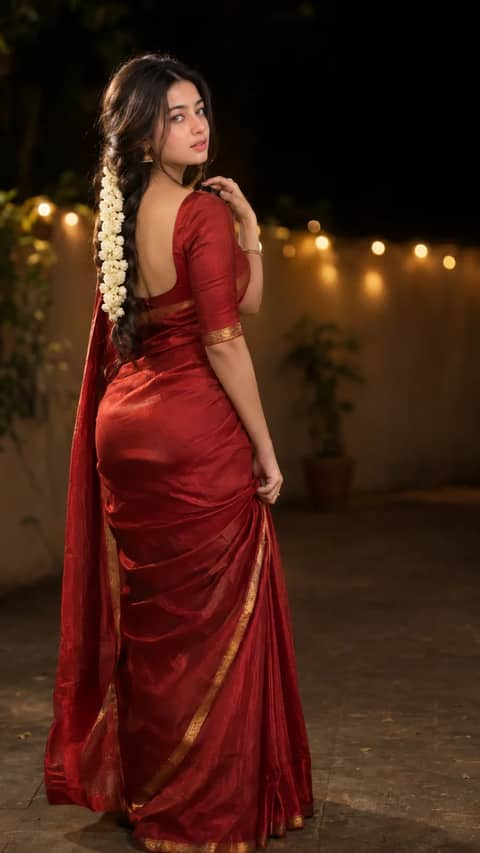
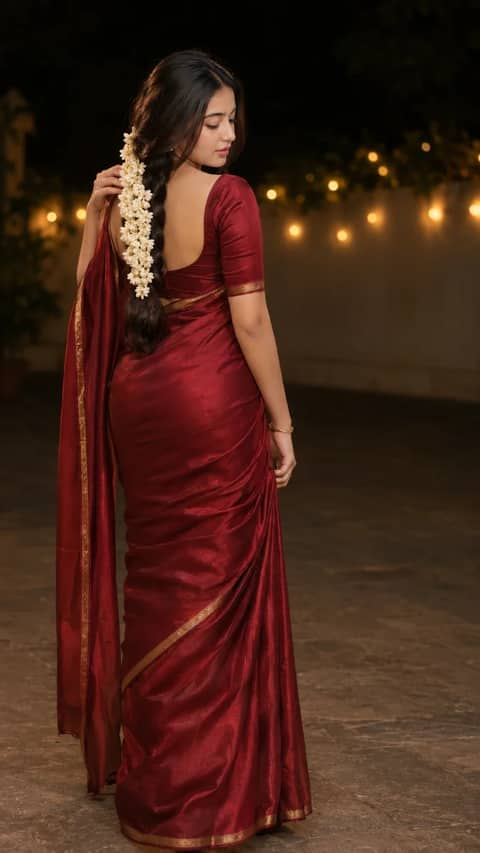
This prompt builds a full-length, rear three-quarter portrait of an Indian woman wearing a crimson silk saree, framed by warm courtyard lighting and fresh jasmine woven down her braid. It balances sharp textile details against a soft evening background without melting into an oversaturated blur.
Specifying a 35mm focal length at f/3.2 gives the frame room to breathe. An ultra-wide aperture like f/1.4 often backfires in full-length compositions. It turns everything past the shoulder into mush, ruining the weave of the saree pleats and flattening the jasmine flowers into white smudges. At f/3.2, you get clean separation. The face profile stays crisp, the weave along the spine stays legible, and the string lights across the courtyard wall still dissolve into round bokeh discs.
The 1/250s shutter speed and ISO 320 tag push both engines away from artificial gloss. AI image generators default to hyper-smooth surfaces when rendering South Asian skin tones under night lighting. Calling out a moderate ISO adds fine grain structure. This breaks up that plastic sheen on the cheek and bare shoulder.
Placing the woman slightly left of center creates negative space on the right. This leaves room for the warm glow of the courtyard lights to balance her crimson drape.
Keep the aperture at f/3.2 for complex hair accessories
Setting your aperture between f/2.8 and f/4.0 keeps the full length of the jasmine strand in focus. Anything wider turns the lower petals into undefined white blobs.
Generators struggle with metallic borders on traditional clothing. If you simply ask for "gold embroidery," the model often pastes thick, melted-looking gold patterns across the entire pallu and pleats. Specifying a "narrow gold zari" sets a clear boundary. It tells the tool to keep the metallic thread work thin and confined to the edges.
The crimson silk description works best when paired with directional lighting. Deep red absorbs light quickly in digital generations, while silk reflects it along the crest of each fold. The prompt explicitly splits the light sources: golden pin lights in the distant background, with a clean falloff around the white jasmine. That dark buffer around the flowers stops the yellow light from tinting the petals yellow. The white stays white, which provides the necessary contrast against the dark hair and red fabric.
Both tools process the prompt well, but they handle the physics of fabric and hair differently.
GPT IMAGE 2.5 interprets the reference image with high structural accuracy. It locks onto the subject's jawline, hairline, and facial proportions reliably across both Variation A and Variation B. It drapes the silk naturally along the lower back, following gravity down to the floor pleats. Its main weak spot is the jasmine texture. It tends to group the petals into tight, uniform clusters that can look slightly synthetic up close.
Nano Banana Pro generates exceptional raw surface textures. The silk displays an authentic slub weave, and individual jasmine buds show distinct green stems and irregular petal shapes. However, Nano Banana Pro can be overly aggressive with ambient warm tones. It sometimes spills yellow light from the background wall across the entire subject, washing out the cool white of the jasmine.
Choose GPT IMAGE 2.5 for reliable reference matching
Use GPT IMAGE 2.5 if you need strict consistency with an uploaded face. It holds the line of the cheek and eye profile far better when the subject turns toward the light.
Generating traditional portraits with hands interacting with hair or fabric frequently triggers predictable rendering errors:
Next ideas
 ChatGPTModel:GPT IMAGE 2.5